

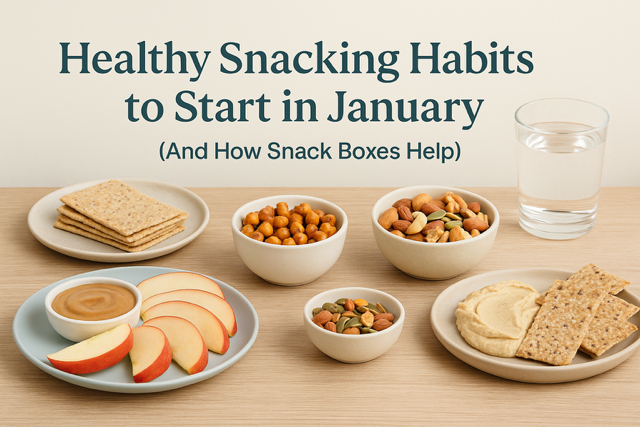
January often arrives with a familiar mix of motivation and pressure. After weeks of festive food, disrupted routines and late nights, many people in the UK feel drawn to a “fresh start”. Yet when it comes to healthier eating, it’s rarely lack of knowledge that trips us up, it’s how busy, real life actually is.
Snacking is a perfect example. Snacks are where intentions and reality often collide: rushed afternoons, school runs, long meetings, or that familiar 3 pm energy dip. The good news is that evidence suggests healthier snacking habits are less about willpower and more about designing your environment and routines so that better choices are easier by default.
This article explores practical, evidence-backed healthy snacking habits to start in January, with a focus on what actually works for busy homes and workplaces and how simple tools, like snack boxes, can quietly support consistency without turning food into a full-time project.
In real life, a healthy snack isn’t about perfection, detoxes or cutting out entire food groups. It’s about balance, portion awareness and nourishment.
Most UK guidance, including the NHS Eatwell Guide, encourages eating patterns that prioritise fibre-rich carbohydrates, adequate protein, healthy fats, and a wide variety of foods across the week rather than rigid rules or “good vs bad” labels.
UK Government Eatwell Guide publication
Practically speaking, a balanced snack often includes:
This doesn’t mean every snack needs to be “perfect”. It means aiming for better consistency most of the time, especially during busy January routines.
What it is:
Instead of choosing snacks at random, use a repeatable structure, for example: fibre and protein.
Why it helps:
Research suggests that snacks higher in protein and fibre are associated with greater satiety compared with refined, low-protein options. A well-known open-access study on high-protein afternoon snacks (such as yoghurt) found improved appetite control and reduced subsequent hunger compared to lower-protein alternatives.
https://pmc.ncbi.nlm.nih.gov/articles/PMC4190484/
Fibre intake has also been linked with improved fullness and appetite regulation, according to systematic reviews in Nutrition Reviews.
https://academic.oup.com/nutritionreviews/advance-article/doi/10.1093/nutrit/nuaf083/8196856
Real-life example:
Make it easier:
Choose 5-6 snacks that fit your formula and rotate them rather than reinventing the wheel daily.
What it is:
Deciding in advance what and when you’ll snack.
Why it helps:
Planning reduces reliance on impulse and decision fatigue, which often peaks when we’re tired or stressed.
Real-life example:
Make it easier:
Keep a short weekly snack list on your phone or fridge so planning doesn’t feel like another task.
What it is:
Making healthier snacks more visible and convenient than less nourishing ones.
Why it helps:
Behaviour research consistently shows that environment design strongly influences food choices, often more than conscious intention.
Real-life example:
Make it easier:
Store less nourishing snacks out of sight rather than banning them entirely.
What it is:
Serving snacks into a bowl or a portioned pack instead of eating straight from multi-serve bags.
Why it helps:
Portion awareness supports mindful eating and reduces unintentional overconsumption.
Real-life example:
Make it easier:
Choose snacks that are already portion-controlled when possible.
What it is:
Drinking water or herbal tea alongside snacks.
Why it helps:
Mild dehydration can sometimes be mistaken for hunger. Pairing snacks with fluids can support appetite awareness and overall hydration, which is encouraged by NHS guidance.
Real-life example:
Make it easier:
Keep a reusable bottle visible on your desk.
What it is:
Adding fibre-rich snacks slowly rather than all at once.
Why it helps:
Sudden increases in fibre can cause digestive discomfort. Gradual increases are better tolerated and more sustainable.
UK guidance suggests adults aim for around 30g of fibre per day, though many fall short.
NHS fibre guidance
Real-life example:
Make it easier:
Focus on one fibre upgrade per week rather than a full overhaul.
What it is:
Pre-deciding how you’ll respond to common snacking challenges.
Why it helps:
Implementation intentions (“if then” plans) have been shown to support healthier eating behaviours, including snacking choices.
https://journals.sagepub.com/doi/10.1177/0146167208325612
https://pubmed.ncbi.nlm.nih.gov/20496982/
Real-life example:
Make it easier:
Write down 2-3 “if then” plans and keep them realistic.
What it is:
Choose protein-containing snacks later in the day.
Why it helps:
Protein-forward afternoon snacks have been associated with improved appetite control and reduced evening overeating in some studies.
https://pmc.ncbi.nlm.nih.gov/articles/PMC4190484/
Real-life example:
Make it easier:
Save your most satisfying snacks for the afternoon dip.
What it is:
Letting go of all-or-nothing thinking.
Why it helps:
Sustainable habits form through repetition, not intensity. One “less ideal” snack doesn’t undo progress.
Real-life example:
Make it easier:
Focus on “better than before”, not “perfect”.
One of the biggest barriers to healthier snacking is decision fatigue, constantly thinking about what to buy, pack or prepare. Snack boxes can help by removing friction rather than adding rules.
Pre-portioned snack boxes may support habit building by:
For workplaces, this can also contribute to wellbeing at work by offering inclusive, convenient choices that don’t rely on individuals bringing their own snacks.
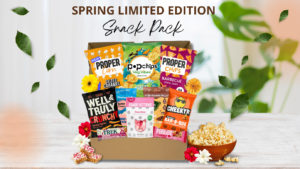
Snack Packs offers both personal snack boxes and corporate office snack boxes, designed to support everyday routines with variety and convenience rather than strict plans. Options include vegan, gluten-free and mixed selections, as well as subscriptions that simplify weekly or monthly planning.
You can explore options here:
What are the healthiest snacks for work?
Snacks that combine fibre and protein tend to be more satisfying. Examples include nuts, seeds, wholegrain crackers with hummus, fruit with nut butter, or portioned snack bars.
How do I stop mindless snacking in the afternoon?
Planning snacks, portioning first, and pairing snacks with hydration can help. “If then” plans are also supported by behavioural research.
Are snack boxes actually healthy?
Snack boxes can support healthier habits when they focus on balanced, portion-controlled options and variety rather than ultra-processed grazing.
What are good vegan and gluten-free snack options?
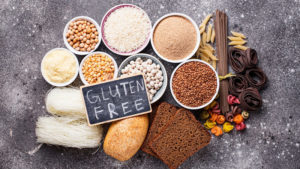
Roasted legumes, fruit and nut mixes, seeds, gluten-free wholegrain snacks, and plant-based protein bars are common options.
How can offices support healthier snacking?
By making healthier snacks visible, inclusive and convenient, and reducing reliance on vending machines or ad hoc purchases.
Conclusion: small habits, real change
A January reset doesn’t require extreme rules or perfect discipline. Evidence suggests that planning, environmental design and consistency matter far more than motivation alone.
By focusing on small, realistic snacking habits and making healthier choices easier to access, it’s possible to build routines that last well beyond January. If you’d like support with planning and convenience, exploring snack box options can be one practical step, whether for home or the workplace.