

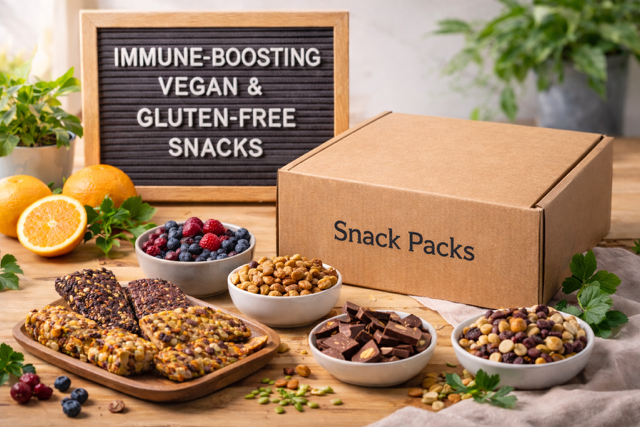
January often arrives quietly but firmly. The festive buzz fades, routines return, mornings feel darker, and many of us notice our energy dipping just as work and family life pick up pace again. It’s no surprise that immune health becomes a focus at this time of year.
Across the UK, January is when people search for simple, realistic ways to feel better, not extreme detoxes or restrictive plans, but small habits that support everyday wellbeing. Snacking, often overlooked, plays a surprisingly important role in this picture.
The following explores vegan and gluten-free snacks that can support immune health in January, grounded in evidence and practical reality. No miracle claims, no quick fixes, just sensible nutrition, thoughtful choices, and easy ways to support your body during winter.
You’ll often see foods described as “immune boosting”, but it’s important to be clear about what that really means.
The immune system is complex. It’s influenced by many factors, including sleep, stress, physical activity, overall diet, and long-term nutritional status. No single food or snack can prevent illness or guarantee immunity.
However, what food can do is support normal immune system function by providing nutrients that play recognised roles in immune health. According to the NHS, a balanced diet helps maintain a healthy immune response, particularly during the winter months when illnesses are more common.
In other words, consistent, nourishing choices, including better snacks, can help support your body’s natural defences as part of a wider healthy lifestyle.
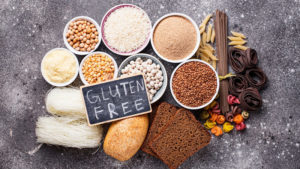
Vegan and gluten-free snacks aren’t just for people with specific dietary requirements. They often appeal in January because they tend to focus on plant-based ingredients, fibre, whole foods, and naturally nutrient-dense options.
For offices and households alike, they also offer inclusivity, making it easier to cater for mixed needs without multiple snack drawers or complicated labelling.
When chosen well, vegan and gluten-free snacks can contribute important nutrients linked to immune health, including vitamins, minerals, antioxidants, and fibre.
Below are some of the nutrients most commonly associated with normal immune function, alongside snack-friendly, vegan and gluten-free sources.
Vitamin C
Vitamin C contributes to the normal function of the immune system and helps protect cells from oxidative stress.
Snack-friendly sources include:
Evidence:
NHS-Vitamins and minerals
Zinc
Zinc plays a role in immune cell development and function. Even a mild deficiency can affect the immune response.
Snack-friendly sources include:
Evidence:
NHS-Zinc
Vitamin E
Vitamin E acts as an antioxidant, helping protect cells from oxidative damage.
Snack-friendly sources include:
Evidence:
NIH-Vitamin E Fact Sheet
Selenium
Selenium contributes to immune system function and thyroid health.
Snack-friendly sources include:
Evidence:
NHS-Selenium
Fibre & gut health
A growing body of research highlights the connection between the gut microbiome and immune function. Fibre helps support a diverse gut microbiota, which plays a role in immune regulation.
Snack-friendly sources include:
Evidence:
British Dietetic Association-Gut health
Rather than thinking about “good” or “bad” snacks, it’s often more helpful to think about timing, balance, and convenience, especially in January, when motivation can dip.
1. Desk drawer snacks for busy days
Ideal for workdays when meals are rushed or meetings overrun:
Why they help:
These snacks combine fibre, healthy fats, and plant protein, which can support steady energy and reduce reliance on sugary pick-me-ups.
2. Commute-friendly, on-the-go snacks
Perfect for early mornings or long travel days:
Why they help:
Having something prepared reduces skipped meals and impulsive choices, supporting more consistent nutrition during busy winter schedules.
3. Evening snacks that feel comforting (but balanced)
January evenings can feel long and cold; comfort matters.
Why they help:
Comfort doesn’t need to mean ultra-processed. These options still offer nutrients while satisfying cravings.
One of the biggest challenges in January isn’t knowing what to eat; it’s having better options available when time and energy are limited.
This is where curated snack options can make a difference. Removing daily decision-making helps people maintain healthier routines, particularly in workplaces and busy households.
For offices, having inclusive vegan and gluten-free snacks readily available can also support:
Snack Packs was built around a simple idea: healthy snacking made easy.
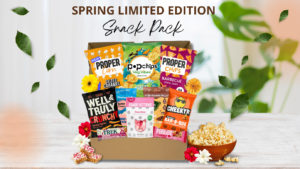
Rather than promoting restriction or trends, curated snack boxes focus on variety, balance, and accessibility qualities that matter most in January. Vegan and gluten-free options can help ensure everyone feels included, whether at home or in the workplace.
By bringing together a range of plant-based, gluten-free snacks in one place, Snack Packs supports people who want to make small, consistent improvements without overthinking every choice, particularly during the winter months.
It’s worth repeating: food alone doesn’t determine immune health.
Alongside nourishing snacks, the NHS highlights the importance of:
When these basics are supported, nutrition can play its part more effectively. January isn’t about perfection; it’s about building habits that last beyond the first few weeks of the year.
Are vegan snacks good for immune health?
Vegan snacks can contribute nutrients such as fibre, vitamins, minerals, and antioxidants that support normal immune function as part of a balanced diet.
Are gluten-free snacks healthier?
Gluten-free snacks are essential for people with coeliac disease or gluten intolerance. For others, they can still be nutritious, depending on ingredients and overall balance.
What nutrients support immune function?
Key nutrients include vitamin C, zinc, vitamin E, selenium, protein, and fibre, alongside overall energy intake.
Are oat snacks gluten-free?
Oats are naturally gluten-free, but are often contaminated during processing. Always look for certified gluten-free oats.
What are good office snacks for January?
Inclusive options like nuts, seeds, roasted legumes, fruit-based snacks, and gluten-free bars work well for shared spaces.